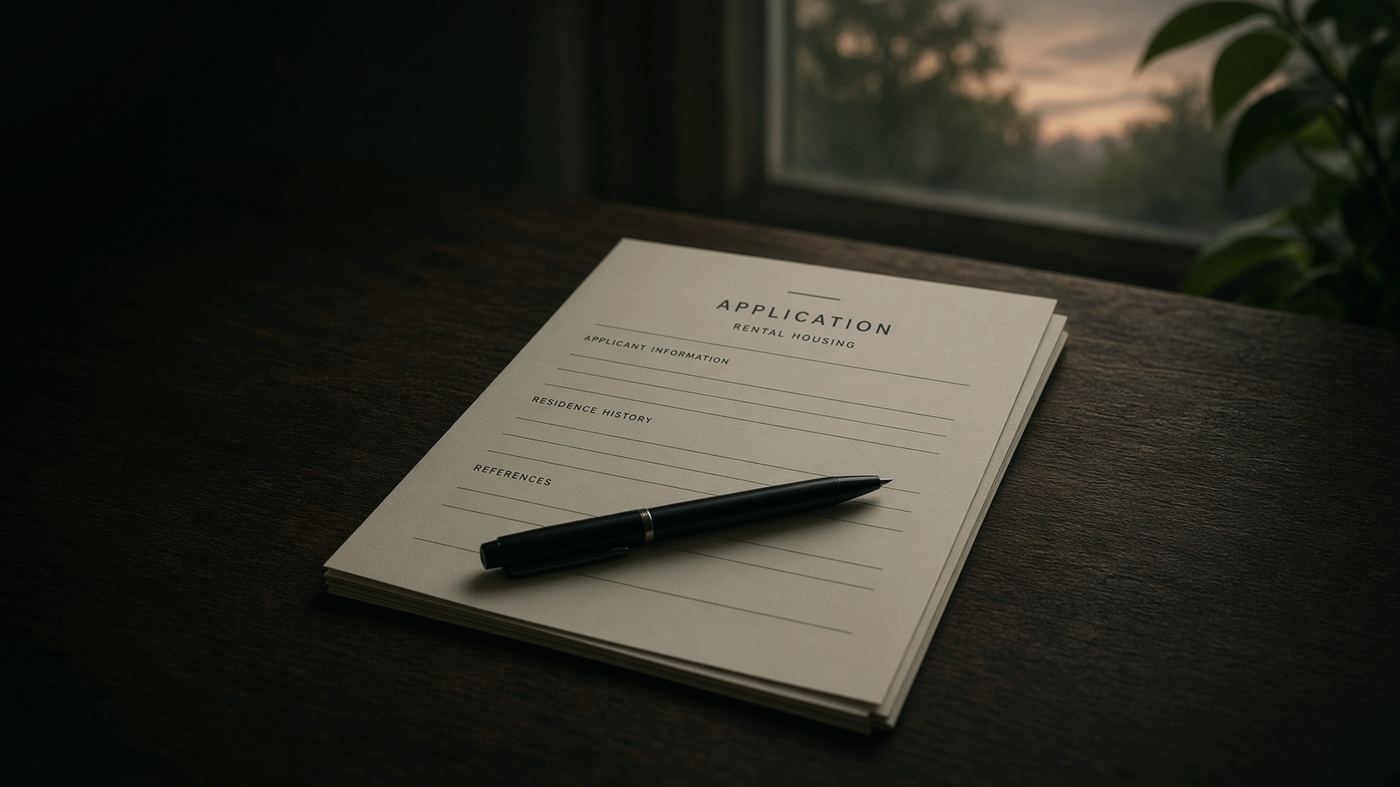
The federal floor on screening reports
If a landlord uses a consumer report — credit, tenant screening, or similar — to deny housing, raise a deposit, or change terms, federal fair-credit law generally requires an adverse-action notice. That notice should tell you the screening company used, that you can get a copy of the report, and that you can dispute errors. HUD and the Consumer Financial Protection Bureau both publish guidance on this.
- Keep the listing, the application, and every fee receipt.
- Keep the denial or 'adverse action' letter if you received one.
- Write down the date you applied, the date you were told no, and who told you.
- Ask in writing for the name of the screening company and a copy of the report.
- If the report is wrong, dispute it with the screening company and tell the landlord you have done so.
Application and listing scams
A common scam is a listing that asks for a deposit, a screening fee, or a wired payment before you have seen the unit or met the owner. The Federal Trade Commission documents how these work. Paying a fee to apply is sometimes legitimate; wiring money to a stranger to 'hold' a unit is a reason to stop and check.
If you already sent money, document the listing, the messages, and the payment, and report it through the FTC and your local police non-emergency line. 211 can also point you at local tenant and fraud resources.
Questions to take to legal aid
- Was a consumer report used to deny me, and did I get an adverse-action notice?
- Does my city or state limit application fees or what a landlord may consider?
- If the report is wrong, what is the fastest way to dispute it?
Common questions
Is a screening denial always discrimination?
No. A denial can be about income, credit, criminal record, or rental history and still be lawful in many places. A denial can also be discrimination. HUD and fair-housing organizations take that question. This page explains the federal report-rights floor, not whether your facts are discrimination.
Do I have to pay to see why I was denied?
Federal fair-credit rules generally require a notice that names the screening company and tells you that you can get the report. You should not have to buy a third-party 'unlock' to learn which company was used. If that is what happened, write it down and take it to legal aid or the CFPB.
Are application fees and lookback periods the same in every state?
No. What a landlord may charge to apply, whether it must be refunded, and how far back a record may be considered are state and city questions. This site does not print a cap or a year-count.
Where do I confirm the screening rule for my address?
Keep the listing, the application, and the denial letter. Ask in writing for the screening company. Open your state page, and take the file to legal aid, a fair-housing organization, or the CFPB if the report is wrong.
Related guides
People also ask
Confirm the rule for your state
All 50 states and DCLast reviewed 8 September 2026. Legal information, not legal advice. Not a law firm. hello@renterprotection.org